
cleans
itself
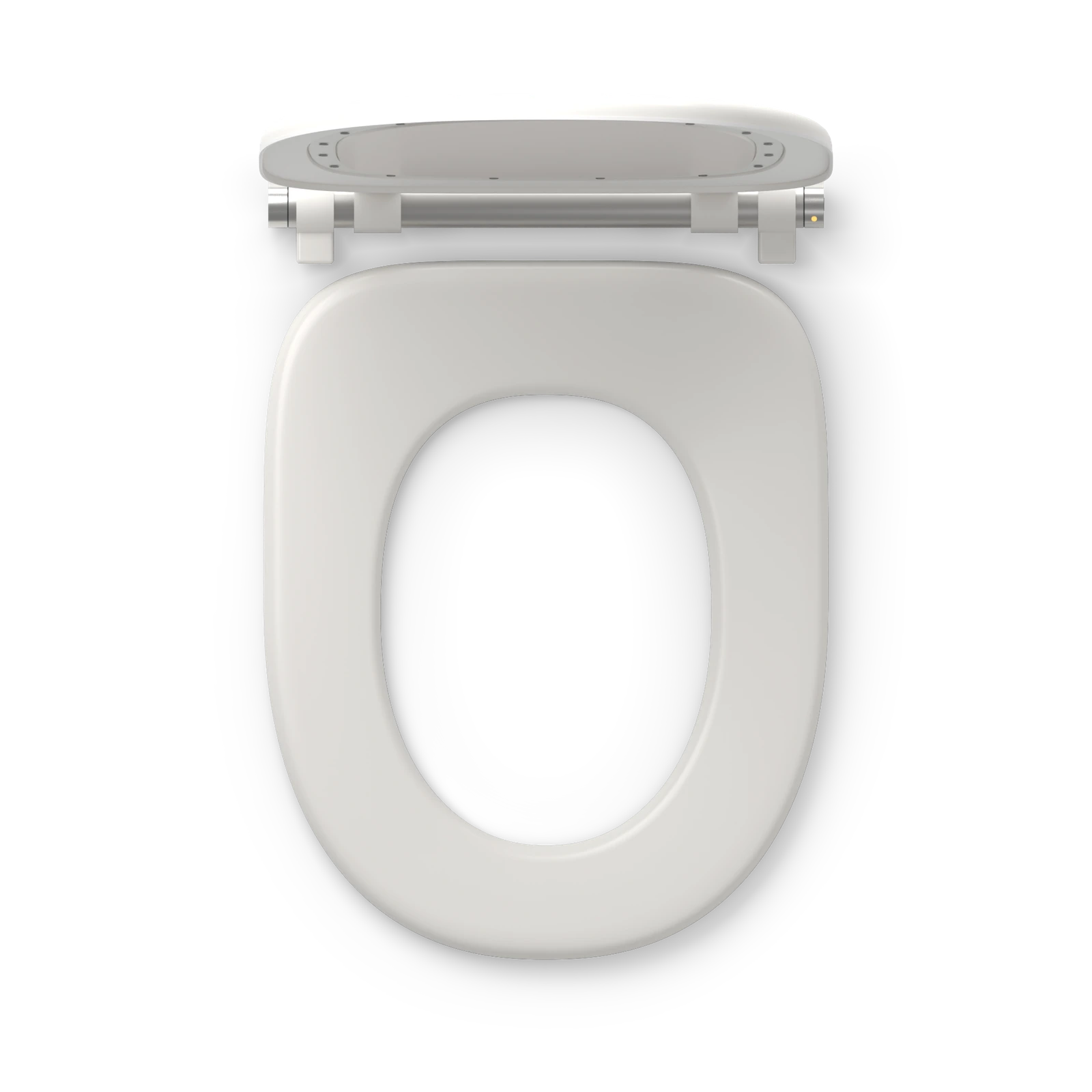
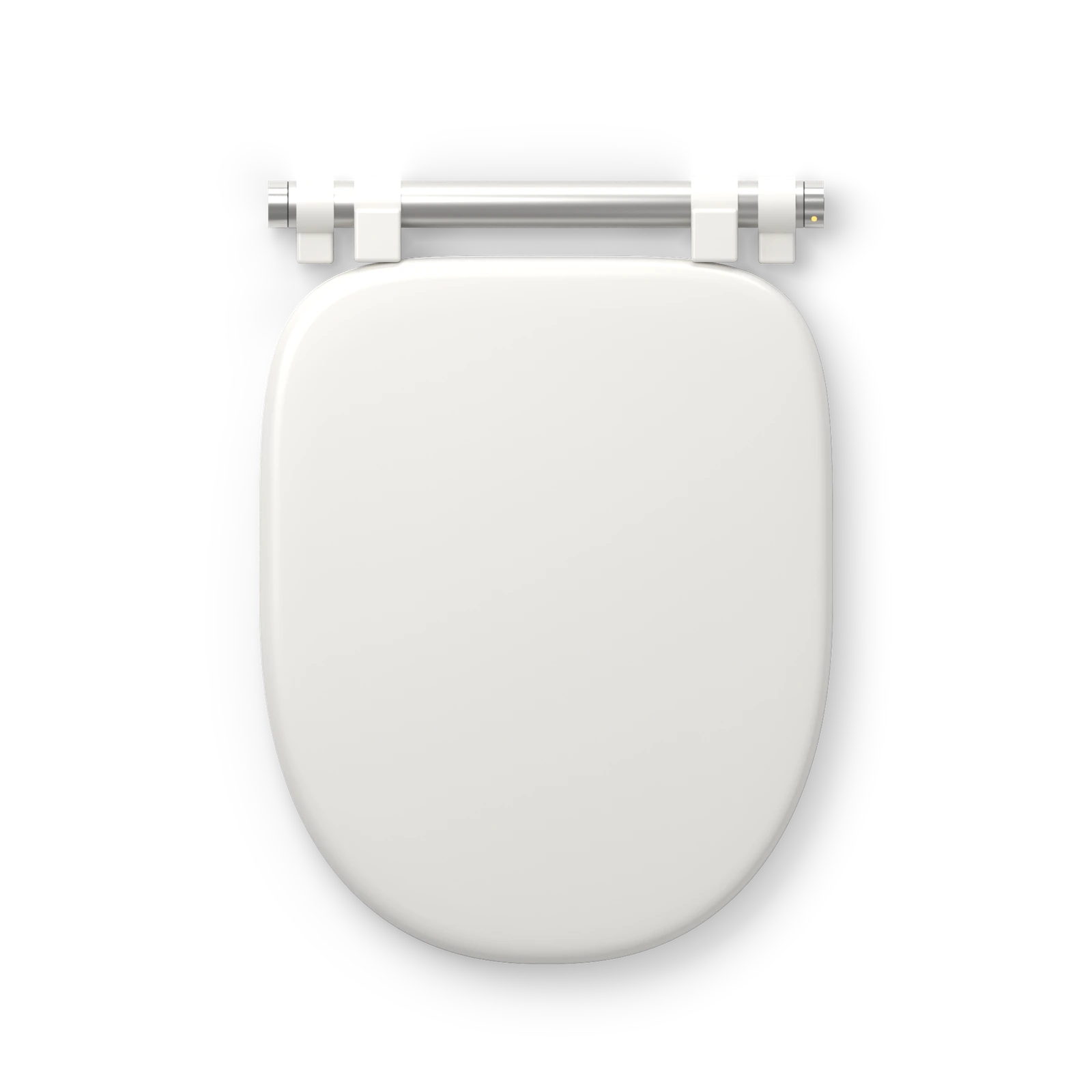
A toilet seat that sheds drops into the bowl, then disinfects itself with UV light. An early ALLOIC design.
Press to watch one full cycle.
Light alone leaves it wet
UV light kills germs. It does not move a single drop of liquid.
And a drop shades whatever sits under it. So the wet has to go first.
When you stand up
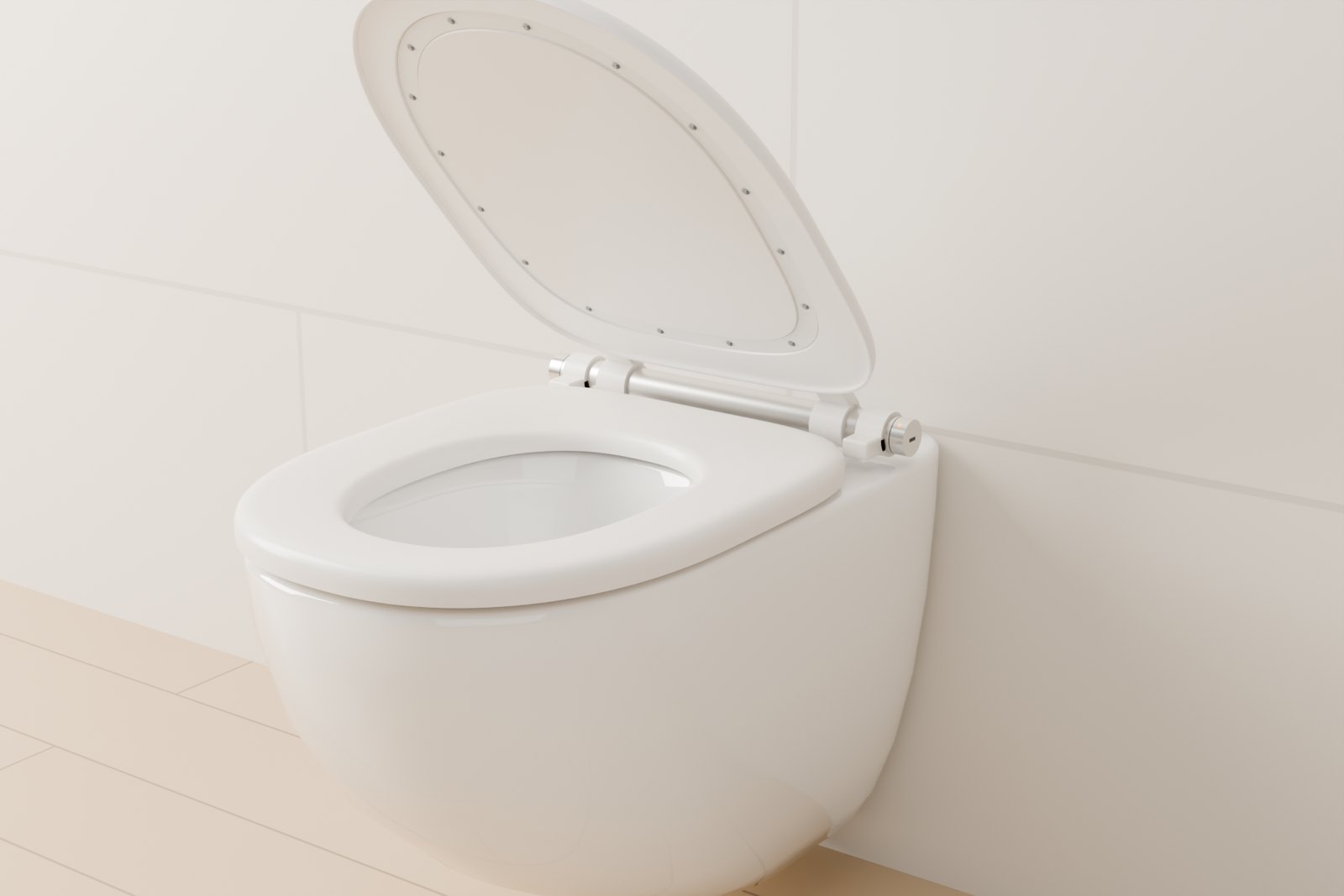
Shaken
Four exciters under the skin hum for six seconds. Drops lose their grip and run down the slope, over the drip edge and into the bowl.
Shut
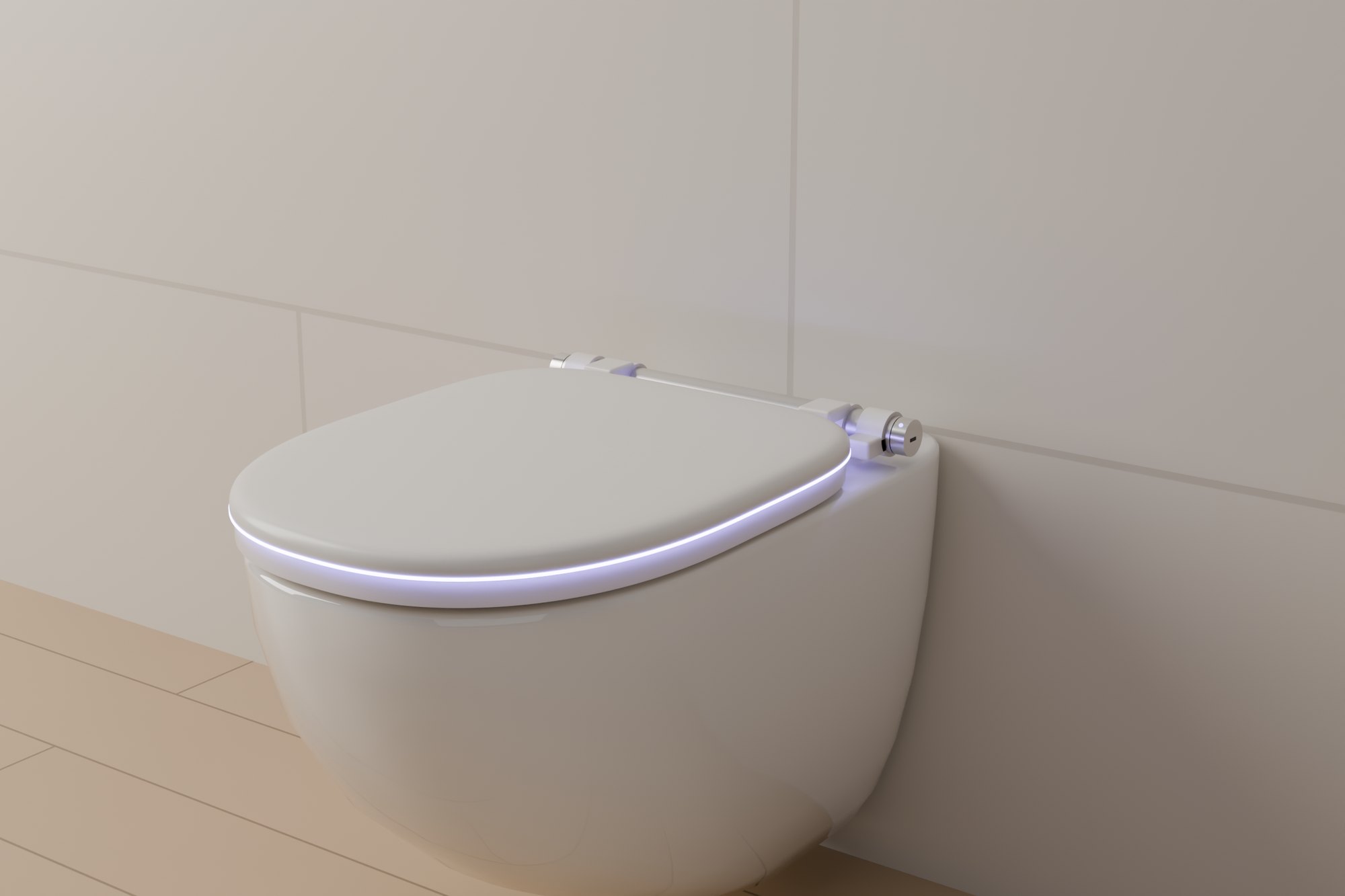
The lid comes down and its edge wraps the seat. A sensor in the hinge confirms it is closed before any light comes on.
Lit
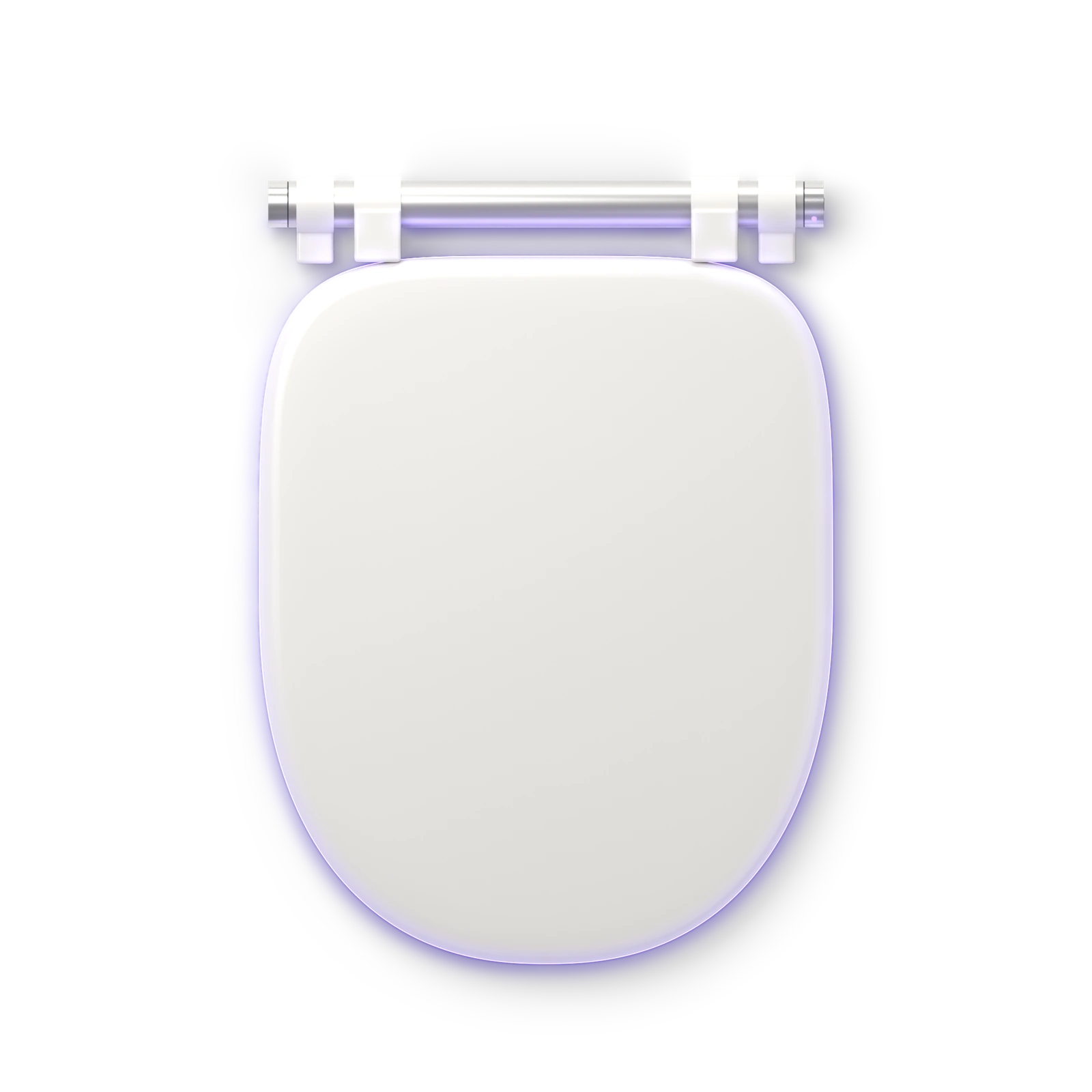
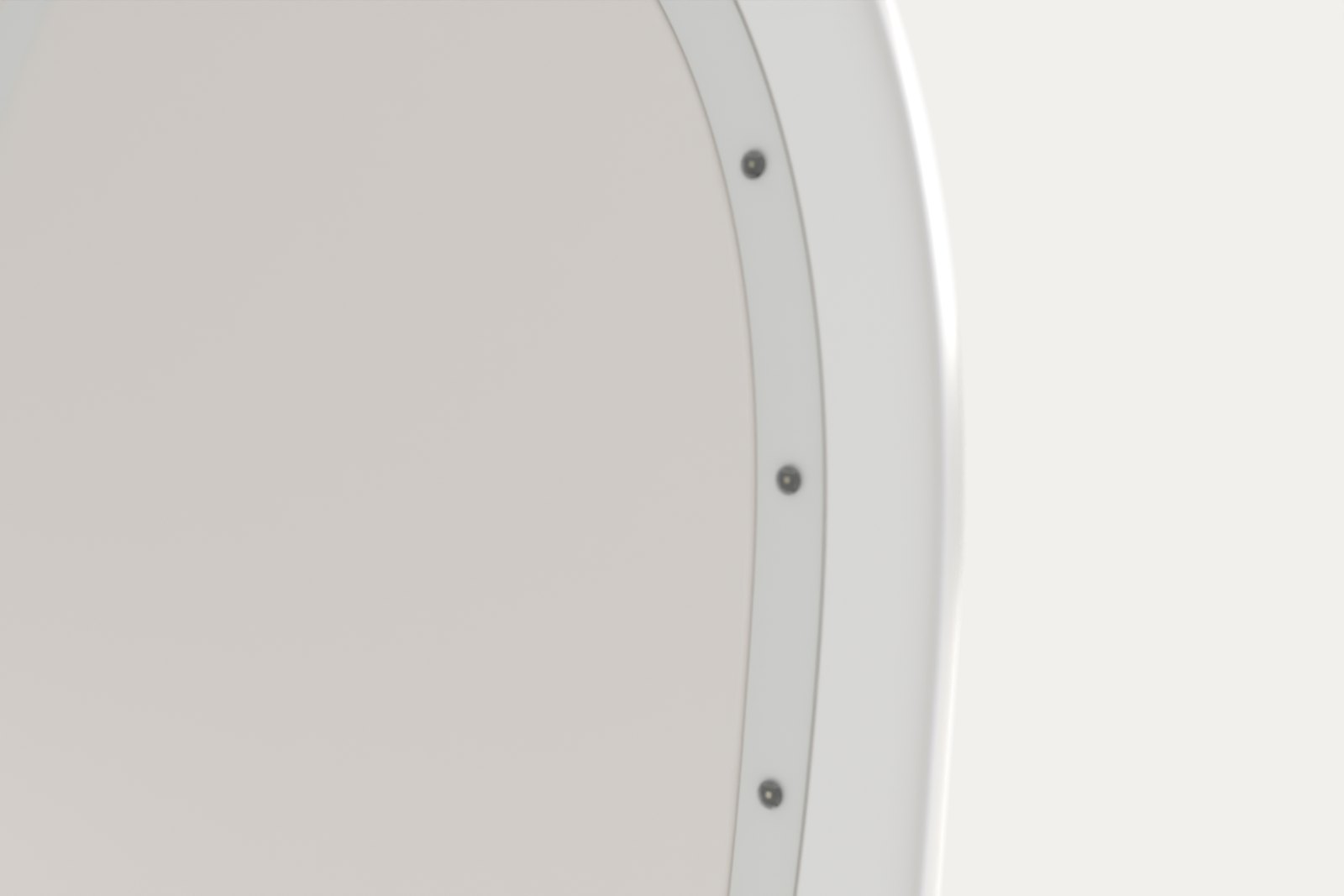
Sixteen UV-C lights run for about a minute and a half, sealed under the lid. UV-C is invisible, so a violet ring round the edge shows the cycle is on.
Why a drop lets go
A drop stays put because its edge grips the surface. Four things in the ring take that grip away.
A drip edge
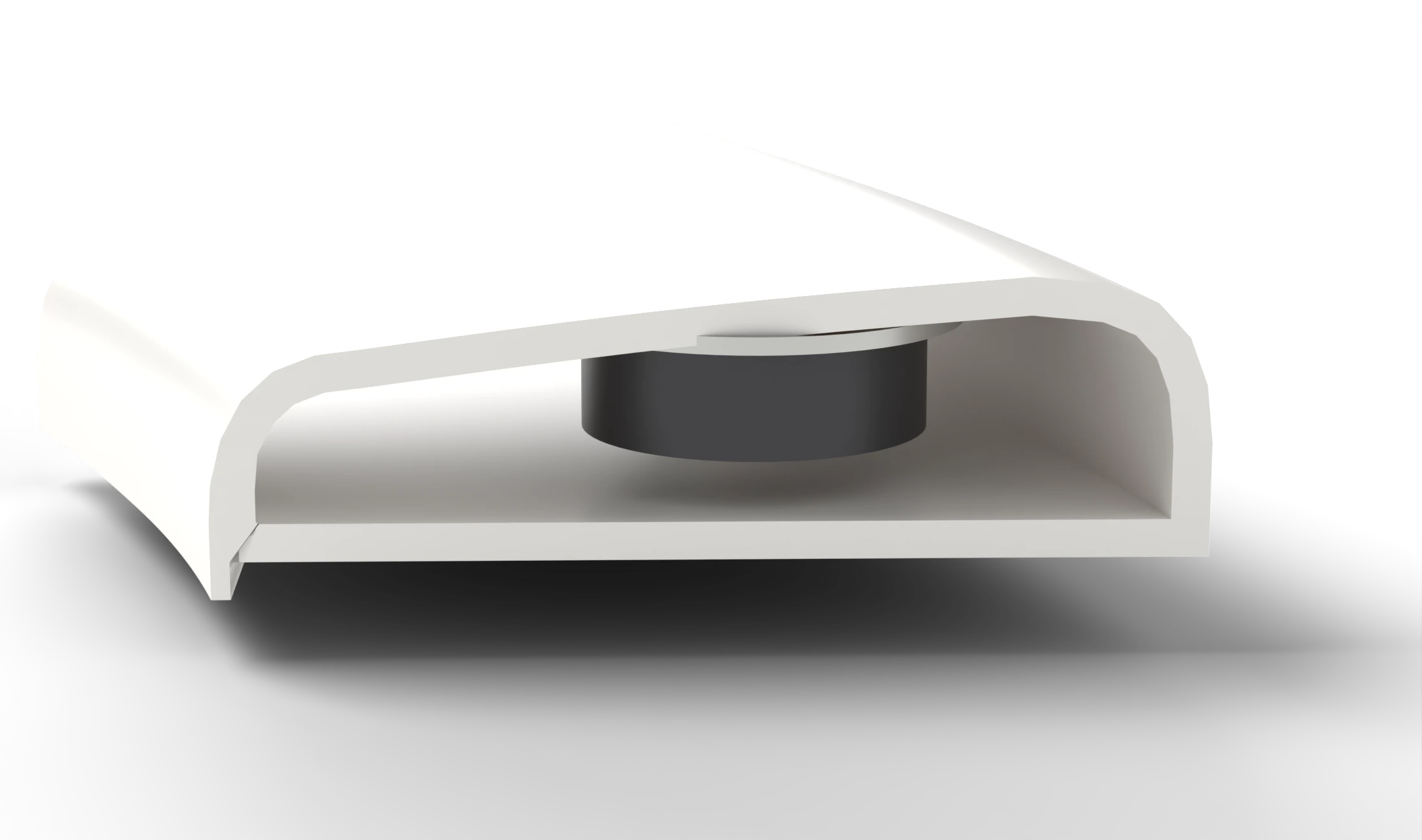
The inner lip turns down past the underside, so a drop falls into the bowl and cannot creep back under.
A 6° fall
The top leans toward the bowl. Flat enough to sit on, steep enough that a 4 mm drop leaves by itself.
A short shake
Exciters move the ring five hundredths of a millimetre, a hundred times a second. That frees drops down to 1 mm.
A slippery coat
The sitting face is coated so a drop's edge barely holds. Grip falls to about a fifth of bare plastic.
- 4 mm and up
- Runs off unaided on the 6° slope.
- 1 to 4 mm
- Lets go when the ring shakes at about 2 g.
- Under 1 mm
- Stays, dries in a minute or two, and takes the full dose of UV-C.
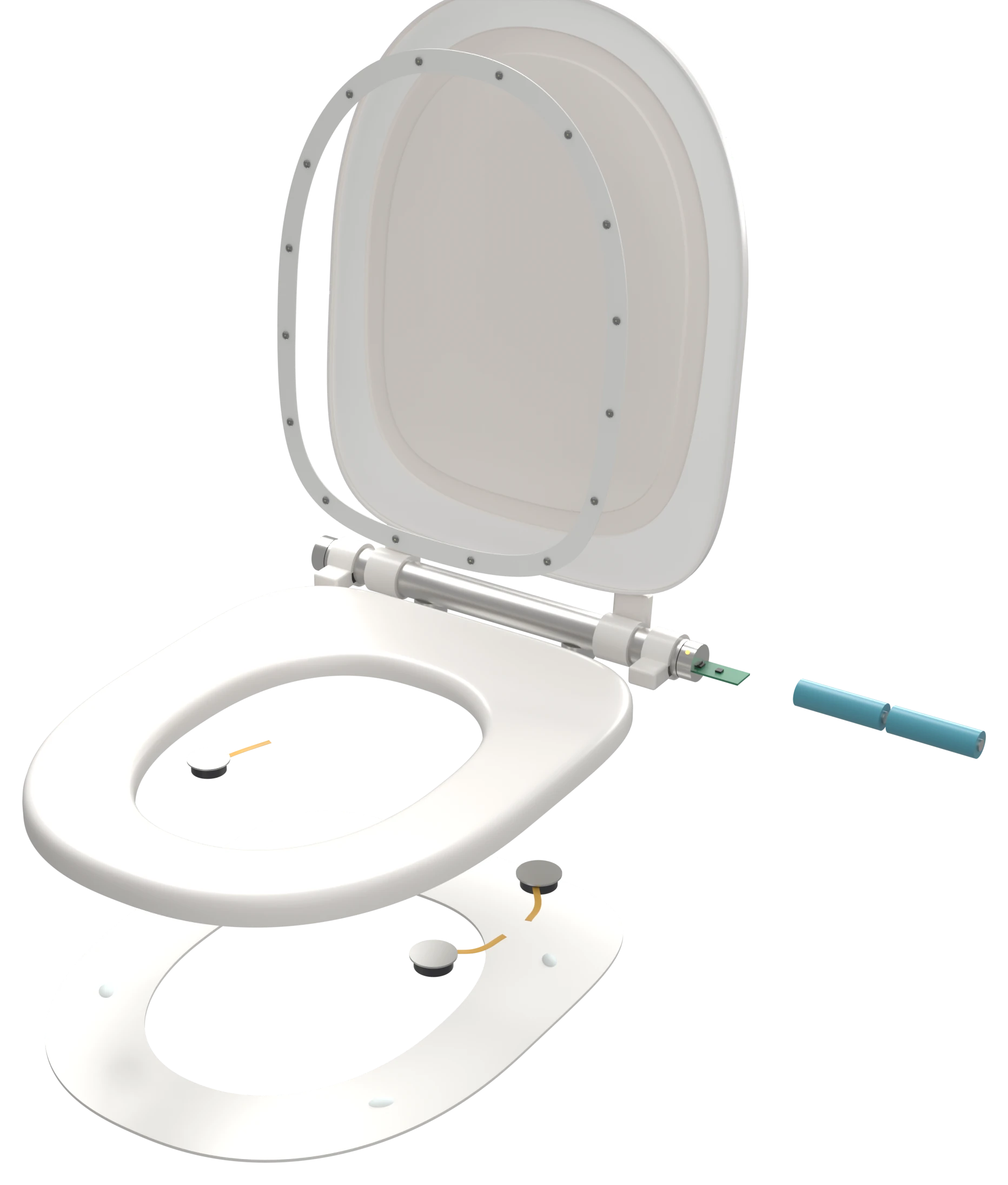
What is inside
- A ring of sixteen UV-C lights
- A top that leans six degrees
- Four exciters under the skin
- A base on four soft feet
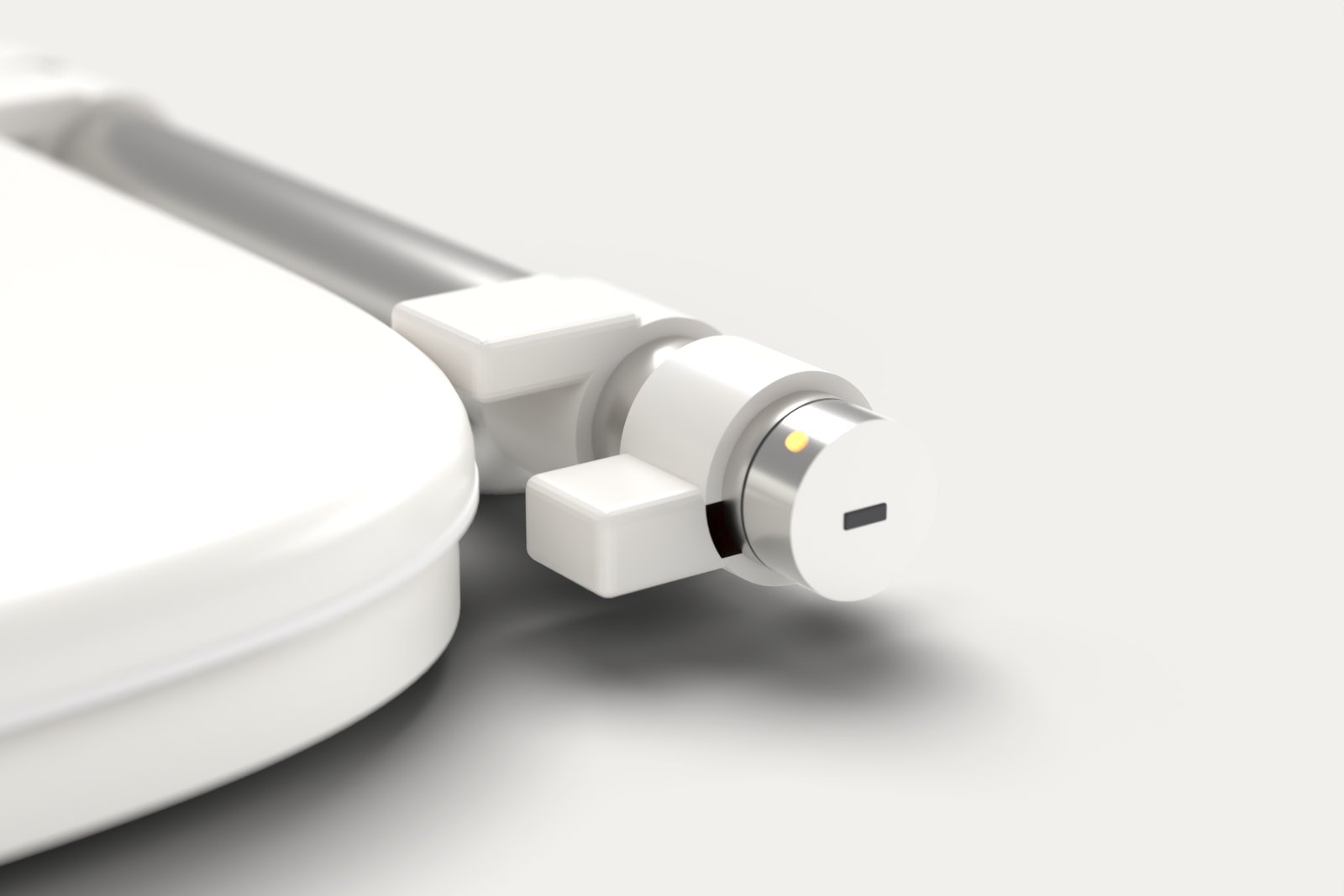
- A hinge that holds the controls
- One board and two cells
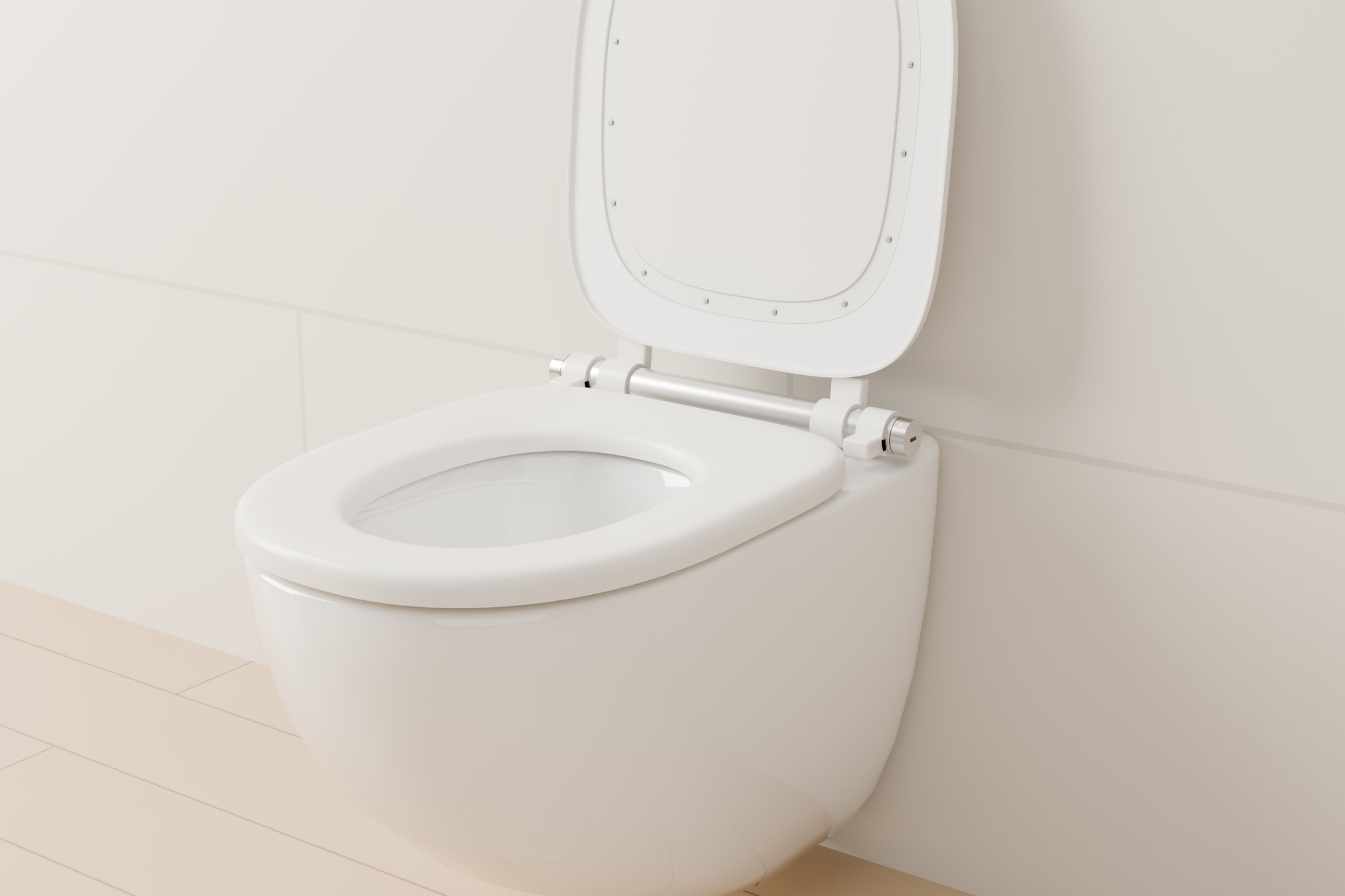
Seat, lid and hinge unit. Nothing goes in the bowl, the tank or the wall.
275 nm LEDs, about 12 mW each, on a ring board in the lid. A white PTFE liner bounces the light across the whole seat.
One moulded shell with a 3 mm wall. The sitting face carries the slippery coat; the inner lip is the drip edge.
25 mm voice-coil exciters, 8 W each, bonded to the shell. They sweep from 60 to 180 Hz so no drop sits on a still spot.
Silicone feet let the ring move a twentieth of a millimetre without passing the hum into the porcelain.
A brushed stainless tube on the standard two bolts. It carries the lid sensor, the status light and a USB-C port.
Controller, amplifier and LED driver share one board. Two 21700 cells hold 36 Wh: about two weeks between charges.
Specification
Drawn to fit a standard North American elongated bowl. Every picture on this page is rendered from that one model.
- Fits
- Elongated bowls with the standard 5.5 in bolt spread.
- Size
- 362 × 500 × 48 mm with the lid shut.
- Shake
- Four exciters, 60 to 180 Hz sweep, 6 s, about 2 g at the surface.
- Light
- Sixteen 275 nm UV-C LEDs, 95 s, 12 mJ/cm² across the seat.
- Safety
- UV-C runs only with the lid shut. Lift it and the light cuts out at once.
- Power
- 36 Wh pack, charged by USB-C. About 14 days at ten cycles a day.
- Made of
- UV-stable polymer shell, PTFE lid liner, brushed 304 stainless hinge.
How the figures were worked out: drop sizes from Furmidge's relation for a spherical-cap drop on a low-grip coat (5° of contact-angle hysteresis) on a 6° slope; the light time from 192 mW of UV-C, 60% of it reaching 900 cm² of seat. Reading: Brunet, Eggers and Deegan, drops moved by vibration (2007), Wang, Wong and others, slippery toilet coating (2019), Texas Instruments, ultrasonic lens cleaning, UV-C LED dose on steel (2023).
Every job in the seat is already done somewhere else: shaking water off a surface, turning a panel into a speaker, disinfecting with a UV-C LED, making porcelain too slippery to stick to, knowing a door is shut. The seat puts them together.
Fits the toilet you have
Two bolts
It mounts on the same two holes as the seat it replaces. Ten minutes with a screwdriver, no plumber.
No pipe, no outlet
Nothing connects to water. The pack charges by USB-C about every two weeks, or stays plugged in if there is a socket nearby.